
Last updated 12 Oct 2026
Who it's for
SIL providers
Houses, shared rosters and round-the-clock care in one place
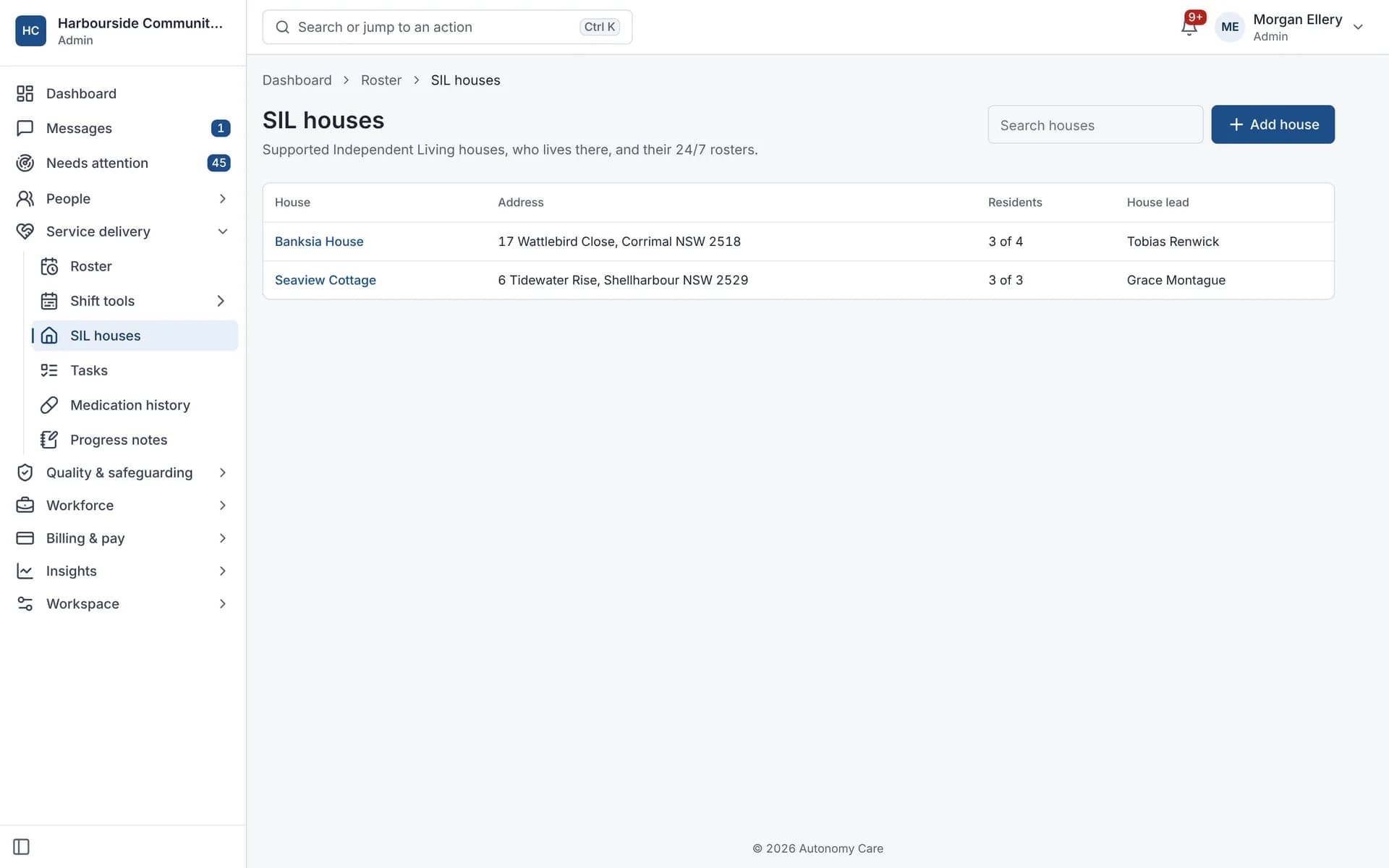
Autonomy Care helps Supported Independent Living providers run houses with shared rosters, round-the-clock shifts and several residents. Coordinators see cover for each house, workers record notes and medication on shift, and incidents are reported and followed up in the same place. Billing splits shared support time between participants for NDIA claims.
What gets in the way
- Covering active and sleepover shifts across several houses.
- Keeping handover notes, medication records and incidents together.
- Splitting shared support time correctly when claiming.
How Autonomy Care runs a house
SIL houses have their own rosters, staffing gap reports and handovers. Community and in-home supports use the same roster, notes and billing.
House rosters and staffing gaps
Apply a roster template that belongs to the house, then see when residents are home with nobody rostered.
About SIL house managementHandovers that get read
Notes and quick flags at clock-out. The next worker sees them and acknowledges them.
About handoversMedication in the house
A MAR chart for each resident, with PRN rules and alerts for late or missed doses.
About medicationShared support, claimed fairly
With a shared billing split, a worker's time is divided evenly across the residents present.
About billing and claimsSleepovers and SCHADS pay
Sleepovers are paid on the timesheet: an allowance per night, with any disturbance paid at overtime rates.
About payrollIncidents followed up
When a handover is flagged incident occurred, reviewers are told so they can check a report was filed.
About incidents
How do house rosters and staffing gaps work?
You apply a roster template that belongs to the house. The staffing gaps report then shows:
- times residents are home with nobody rostered (it assumes 24/7 support is expected),
- house shifts nobody is assigned to, and
- shifts with fewer workers than the ratio needs.
How is shared support claimed across residents?
When a shift's billing split is set to shared, each worker's time is divided evenly across the residents present. For example, a 6-hour 1:3 shift bills 2 hours to each resident, and the parts always add back up to the total.
NDIS guidance says regular SIL is claimed either weekly or hourly, not both, so check the current rules for your service agreements.
How are handovers recorded?
A handover has free-text notes and quick flags: medication given, incident occurred, needs follow-up and supplies low. It is linked to the shift, the participants and the house. The next worker rostered sees unacknowledged handovers from the last 14 days and acknowledges them.
How to set up a house
A house takes a few minutes to set up once residents are in Autonomy Care.
Add the house
Enter the address and the residents who live there.
Create the roster pattern
Set the shifts that repeat each week, including sleepovers.
Assign the team
Add the workers who usually cover the house.
Choose how shared time is billed
Set the shift's billing split to shared, so each worker's time is divided evenly across the residents present.
Check the staffing gaps
Open the house's staffing gaps report and fill any times residents are home with nobody rostered.
Check how much claiming time you spend each month
Uses only your numbers. Nothing you enter here is sent or stored.
Time on claims now
18.3 hours a month
See the full calculationThe full calculator shows every assumption and the working.
Questions from SIL providers
Can it handle SIL houses and community supports together?
Yes. SIL houses have their own rosters, staffing gap reports and handovers, and community and in-home supports use the same roster, notes and billing.
Can one shift cover several residents?
Yes. A shift can include several residents, and with a shared billing split the worker's time is divided evenly across the residents present for invoicing and claims.
How are sleepovers paid?
Sleepovers are paid on the timesheet by the SCHADS pay calculator: an allowance per night, with any disturbance paid at overtime rates. See payroll and the SCHADS Award.
Can we track medication in the house?
Yes. The medication module gives each resident a MAR chart, with PRN rules and late or missed dose alerts.
What happens if a handover says an incident occurred?
Incident reviewers are notified when a handover is flagged "incident occurred", so they can check an incident report has been filed.
Does it help with SIL registration?
It helps you keep the records an audit looks at, such as incidents, policies, training and handovers. It doesn't register you; registration is through the NDIS Commission.
Running several houses or sites?
Enterprise and multi-site
Roles, single sign-on, activity logs and finance connections for larger providers
About Autonomy Care for larger providersSIL house management
Residents, house rosters, staffing gaps and handovers
About SIL house management
Modules SIL providers use most
Rostering and timesheets
Build rosters, fill gaps and approve hours.
See how it fits your service
Get started, or book a demo and we'll walk you through it with your own questions.